
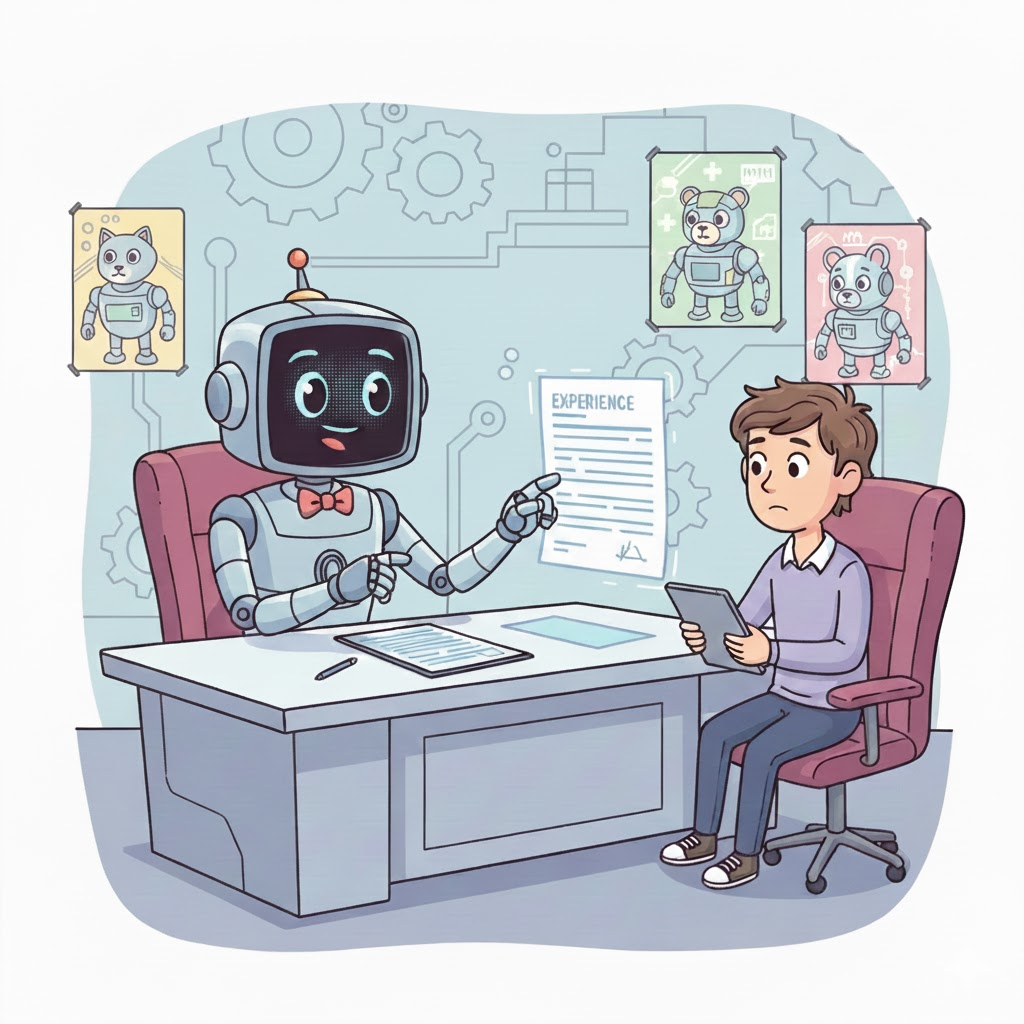
I can’t afford a $200/hour career coach.
But at 34, trying to pivot from 15 years in restaurants to digital marketing, I desperately needed guidance. Not generic LinkedIn advice or another “10 steps to find your passion” article. I needed someone to help me figure out what the hell I was doing.
So I did what any reasonable person in 2026 would do: I started using an AI career coach.
Not to write my resume for me. Not to apply to jobs on autopilot. But as an actual thinking partner to help me navigate one of the most confusing periods of my life.
Six weeks in, here’s what’s working, and what isn’t.
- The Problem: I Had Energy But No Direction
- What AI Actually Told Me (And Why It Mattered)
- How I'm Actually Using AI (Specific Examples)
- How AI Helps With the Actual Writing
- What Else AI Has Been Helpful For
- When AI Tries to Lead You Astray (And Why That's Good)
- What Research Says About AI in Career Development
- What AI Can't Do For You
- How to Use AI as Your Career Coach (If You Want To Try)
- The Honest Truth About Using AI
- Questions About Using AI for Career Change
The Problem: I Had Energy But No Direction
One of the biggest problems I’ve personally faced in my career change journey is a lack of direction.
I have the energy. I have the determination. I have the consistency. But that often simply leads to spinning your wheels if you don’t know what path to take.
Before I decided to explore the potential of AI in my career change, I was placing all my hopes on Coursera and Google certificates, which, while helpful, aren’t going to be the defining factor in what gets you hired.
I was doing the work. I just wasn’t doing the right work.
That’s where Claude AI came in. Not as a magic solution, but as a guide to help me map out a plan of action, keep me accountable, and maintain focus.
What AI Actually Told Me (And Why It Mattered)
After doing some prompt engineering to make sure Claude wouldn’t just agree with everything I said, I asked it to help me figure out my strategy.
Me: “I’m working on the Google Digital Marketing Certificate. What else should I be doing?”
Claude: “The certificate is helpful, but it’s not going to carry you through an interview or demonstrate value to an employer. You need a portfolio. Start building one now.”
This was the first time anyone, human or AI, had told me this directly.
Career advice online is always so vague: “Build your skills!” “Network!” “Show your value!” But nobody tells you specifically how or what to prioritize.
Claude didn’t just say “build a portfolio.” It helped me map out:
- Exactly what kind of portfolio (blog with SEO-optimized articles)
- How many pieces I needed (8-10 to start)
- What topics to write about (my actual experience, not generic advice)
- Timeline for completion (4 weeks of writing, 2 weeks building website)
- When to start applying (Week 7, not Week 1)
Suddenly, I had a clear path instead of just “vibes and hope.”
How I’m Actually Using AI (Specific Examples)
Let me get specific about what this looks like in practice.
1. Finding My Niche
When I first became interested in digital marketing, I wasn’t sure where I would fit in with my existing skills.
Instead of asking Claude “What should I do?” (which gets you generic answers), I asked Claude to interview me:
“Ask me a series of 10 questions aimed at figuring out where I would best fit under the digital marketing umbrella.”
Claude asked about:
- What kind of work energizes me vs. drains me
- My natural strengths (communication from restaurants)
- What I’m already good at (writing)
- What I enjoy doing even when I’m not paid
- Where I see myself in 5 years
After the interview, Claude’s recommendation: Focus on SEO content marketing given my pre-existing interest in writing and blogging.
This took 20 minutes and saved me months of trying random things, reading outdated guides, and going off in unproductive directions.
2. Brainstorming Content (Reverse Prompting)
I’ve also used this method called “reverse prompting” in brainstorm sessions.
Unlike simply dumping my thoughts into a blank Google Doc, Claude knows to ask follow-up questions that help expand ideas into bigger concepts. Through this series of back-and-forth, we often end up uncovering a unique angle to cover.
Here’s how a typical brainstorm goes:
Me: “I want to write about why I left restaurants.”
Claude: “What specifically made you leave? Was it one moment or a slow realization?”
Me: “It was realizing I couldn’t afford to fix my teeth because I had no dental insurance.”
Claude: “That’s interesting. How long had you been deferring dental care?”
Me: “Like… 10 years.”
Claude: “So this isn’t just about one chipped tooth, it’s about a decade of choosing passion over benefits. That’s the article.”
And boom: Article #4 was born.
It’s a synergistic relationship:
- I have ideas
- Claude teases the threads apart
- I narrow the focus based on its feedback
- Claude gives further feedback and proposes article ideas
- I pick one but tweak its scope
- Claude either agrees or pushes back
Claude is an excellent sounding board. Sometimes you just need interaction to really get your juices flowing.
3. Accountability Partner
I’ve had moments of doubt with Claude’s plan for me, so I shared my anxious thoughts.
Me: “Should I make another blog that is less personally branded? Like a gaming blog about this new game that just came out?”
Claude: “No. What you’re talking about can take months of time. Stay the course with what you’re already doing.”
To be honest? I really needed somebody in my life to tell me that.
When you’re in the middle of a career change, every shiny opportunity looks tempting. AI helps me stay focused when my restart cycle patterns try to kick in.
How AI Helps With the Actual Writing
Let’s state the obvious: AI is quite helpful for writing, but not in the way you might think.
Through some clever prompting techniques I learned in a one-day AI personal assistant course, I’ve engineered Claude with a style guide and format that I desire for my blog posts.
Here’s my process:
- I tell Claude the topic I want to write about
- Claude interviews me with targeted questions
- I answer in my own words (rambling, unfiltered)
- Claude organizes my answers into article structure
- I edit everything to sound like me
That means it’s still my writing. Claude just helps with some of the tedious heavy lifting of formatting and editing.
Of course, you should never rely on AI to fully do anything. I still edit everything Claude gives me because there can be:
- Awkward pacing
- Clearly inhuman phrasing
- Occasional hallucinations
- Over-optimization that kills authenticity
This experience has actually made me more confident that human writing will stick around for some time to come.
What Else AI Has Been Helpful For
Claude is helpful for anything you can imagine:
Resume optimization
- Rewriting my restaurant experience to highlight transferable skills
- Identifying keywords from job descriptions
- Structuring accomplishments using the STAR method
Keyword research
- Finding what people actually search for
- Identifying long-tail keywords with less competition
- Understanding search intent behind queries
Learning on demand
- Explaining jargon and terms I’m unfamiliar with
- Breaking down complex marketing concepts
- Teaching SEO principles as they become relevant
Interview prep
- Practicing common questions
- Helping me articulate why I’m changing careers
- Preparing stories that demonstrate my skills
It’s like having a real career coach on demand, available 24/7, for free.
When AI Tries to Lead You Astray (And Why That’s Good)
Though I praise Claude, I must caution: do not start thinking it’s a cheat code.
AI is a strong tool, but you have to stay aware and challenge it.
Example of AI going wrong:
I had told Claude in one of our conversations that part of my reason for wanting a career change was dental insurance. I shared an anecdote about chipping a tooth from grinding in my sleep.
Claude then tried to convince me to write a 2,000-word blog post titled: “What Grinding My Teeth at Night Taught Me About Career Choices.”
Me: “Claude, this sounds ridiculous. The teeth grinding isn’t teaching me anything about my career.”
Claude: “You’re right. Let’s refocus on the economic reality—you can’t afford dental care, which is why you need benefits.”
This back-and-forth is actually valuable. It forces me to think critically about what makes sense and what doesn’t.
Another Example: The Personal Story Problem
After Claude and I had come up with a list of potential blog posts, I started to realize they were all mainly personal stories.
Me: “Claude, shouldn’t we be making content that is more informative and authoritative? Google’s algorithm prioritizes helpful content now, not just personal stories.”
Claude: “You’re absolutely right. Let’s balance your authentic stories with practical guides people can actually use.”
So Claude isn’t perfect, but it’s actually better that way.
It’s immensely helpful, yet keeps you on your toes, and allows you to use the knowledge you’re learning by calling Claude out when you feel skeptical about its approach.
I know that may sound off-putting to the uninitiated, but I couldn’t recommend the experience more.
What Research Says About AI in Career Development
Using AI for career guidance isn’t just a personal experiment, it’s becoming a recognized trend.
According to an article from Forbes, nearly half of job seekers reported using AI tools like ChatGPT for resume writing, interview prep, and career planning. The adoption rate is highest among career changers and those entering new industries. What’s more, is this becoming not only expected, but preferred by recruiters.
Research published by Science Direct suggests that AI-powered career guidance tools can be particularly effective for individuals who lack access to traditional career counseling due to cost or geographic barriers. The study found that AI tools provided comparable guidance quality to human career coaches for tactical tasks like resume optimization and interview preparation.
However, the same research emphasizes that AI should complement, not replace, human judgment—particularly when making major career decisions that involve values, personal circumstances, and long-term life planning.
What AI Can’t Do For You
AI has the same limitations as any other tool: it can’t do everything.
Just as I could have locked in and gotten as many Google certificates as possible, or read every textbook on digital marketing, you still have to get some skin in the game and earn that experience through trial and error, failure and success.
Like I’ve discussed before on this blog, it doesn’t matter how much you read about Spanish, chess, or cooking. You will never grow a skill unless you put it into practice by speaking Spanish, playing chess, or cooking a new recipe.
Iron sharpens iron.
AI can guide you. It can get you past the blank page stage of writing. It can save you time on beginner mistakes.
But it can’t hold your hand the entire way.
Your relationship with AI must be synergistic with give and take, and a healthy dose of skepticism.
What AI can’t do:
- Make decisions for you about what career path is right
- Network on your behalf or build genuine relationships
- Actually apply the skills you’re learning
- Interview for you or demonstrate your personality to employers
- Replace the experience that comes from doing the actual work
- Know your specific life circumstances and constraints
What AI can do:
- Help you think through decisions more clearly
- Teach you skills faster by answering questions immediately
- Organize your thoughts and plans
- Hold you accountable to your own goals
- Challenge your assumptions when you ask it to
- Save you time on tedious tasks so you can focus on high-value work
How to Use AI as Your Career Coach (If You Want To Try)
If you’re considering using AI for your own career change, here’s what I’d recommend:
1. Set it up properly Don’t just ask random questions. Create a “system prompt” that tells the AI:
- Your situation and goals
- Your timeline
- Your constraints (budget, time, skills)
- How you want it to communicate (direct, not sycophantic)
2. Use reverse prompting Instead of: “What should I do?” Try: “Ask me 10 questions to help me figure out what niche I should pursue.”
3. Challenge it When AI suggests something that doesn’t feel right, push back. Say “I don’t think that makes sense because…” and see what it says.
4. Use it for brainstorming, not final decisions AI is great for generating options and thinking through scenarios. But YOU make the final call.
5. Treat it like a junior colleague You’re in charge. AI is there to help, but it needs oversight, correction, and direction.
6. Combine AI with human input Talk to real people in your target field. AI can prep you for those conversations, but it can’t replace them.
The Honest Truth About Using AI
I’m six weeks into using AI as my career coach, and I haven’t gotten hired yet.
I don’t have some magical success story to sell you.
What I do have is:
- A clear plan I’m executing on
- 6 published articles in my portfolio (with 4 more in progress)
- Better understanding of what digital marketing actually involves
- Confidence that I’m doing the right work, not just busy work
- A sense of direction I didn’t have before
Will AI help me successfully change careers? I don’t know yet. Ask me in 6 more weeks.
Is AI a valuable tool in the process? Absolutely.
It’s not a magic solution. It’s not a shortcut. It’s not going to do the work for you.
But if you’re stuck, overwhelmed, or spinning your wheels like I was? AI might be the thinking partner you need to get unstuck.
Questions About Using AI for Career Change
Which AI should I use? ChatGPT, Claude, Gemini?
I use Claude, but honestly, any of the major AI assistants (ChatGPT, Claude, Gemini) will work fine for career coaching. They have slightly different personalities. Claude tends to be more conversational, ChatGPT is more concise, Gemini integrates well with Google tools, but the core functionality is similar. Try a couple and see which communication style you prefer. The free versions are usually sufficient for career planning; you don’t need to pay for premium unless you’re doing heavy research or need longer conversations.
Won’t employers know I used AI and reject me?
If you’re copy-pasting AI outputs directly into resumes or cover letters without editing, yes, it’s obvious and looks bad. But if you’re using AI as a thinking partner; brainstorming, organizing your thoughts, then rewriting everything in your own voice, it’s indistinguishable from just being a good writer. The key is that YOUR ideas, experiences, and voice come through. AI should be invisible in the final product. Think of it like using spell-check, nobody cares that you used a tool, they care about the quality of your final work.
Is it cheating to use AI for my career change?
No more than using Google to research companies or using a calculator for budgeting. AI is a tool. What matters is: Are you learning? Are you developing real skills? Can you do the work once you’re hired? If you’re using AI to understand concepts, organize your thinking, and move faster, that’s strategic. If you’re using it to fake skills you don’t have, that’s when it becomes a problem. The test is simple: Could you explain and defend everything in your portfolio in an interview? If yes, you’re using AI ethically.
What if I can’t afford Claude Pro or ChatGPT Plus?
The free versions work fine for most career coaching needs. I used free Claude for the first month and only upgraded when I needed longer conversations. You can also rotate between free accounts (ChatGPT, Claude, Gemini) to get more usage. The main limitation of free versions is conversation length and sometimes speed, but for brainstorming career moves and getting advice, free is totally sufficient. Don’t let cost be an excuse—start with free tools first.