
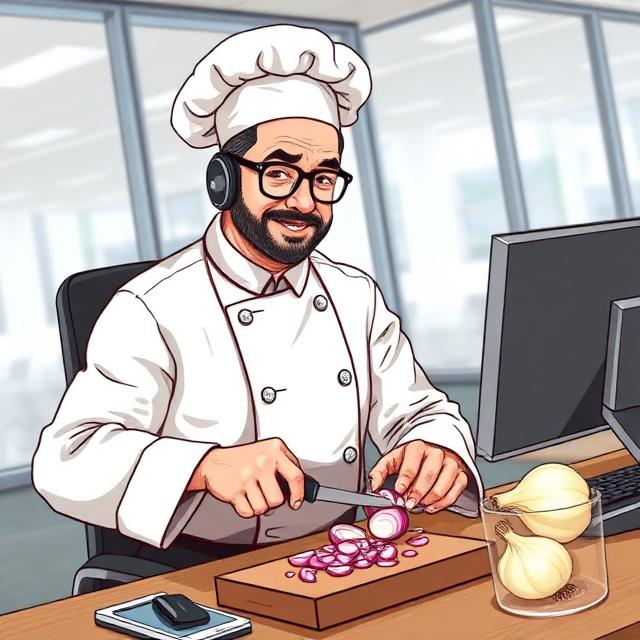
When I tell people I’m transitioning from restaurants to digital marketing, I usually get one of two reactions:
“Oh, so you’re starting completely from scratch?”
Or:
“That’s… quite a change. Do you have any relevant experience?”
The assumption is always the same: 15 years in kitchens and behind bars = zero transferable skills for a desk job.
But after spending the last few months learning digital marketing and building this portfolio, I’ve realized something:
Restaurant work taught me more about marketing than most marketing courses ever could.
Not the theory. Not the jargon. But the actual skills that make marketing work: understanding customer psychology, communicating under pressure, optimizing systems, and getting people to say yes.
Here’s what 15 years in restaurants actually taught me about digital marketing.
- Understanding the Customer Journey (Before I Knew It Had a Name)
- Communication: Selling Without Being Salesy
- The Back of House Skill Nobody Talks About: Direct Communication
- Quality Control: The Standard is the Standard
- Staying Calm Under Pressure (Or Going Bald Trying)
- Understanding How All the Parts Work Together
- The Congruency Principle
- What Research Says About Transferable Skills
- The Real Transferable Skills List
- What I'm Not Claiming
- Why This Actually Matters for Career Changers
- Questions About Transferring from Restaurants to Marketing
Understanding the Customer Journey (Before I Knew It Had a Name)
In digital marketing, everyone talks about the “customer journey” or the “marketing funnel” (how you move someone from awareness to interest to decision to action)
In restaurants, we just called it “doing your job.”
The funnel in action:
Awareness: Customer sees the sign in the window advertising the new seasonal menu, or they walk past and notice the ambiance through the windows.
Interest: They sit down, you greet them, and you start building rapport. Maybe you recommend a drink, describe a dish in a way that appeals to their appetite, their desire to celebrate, their want to impress a date.
Desire: You’re not just listing ingredients, you’re selling an experience. “The scallops are seared perfectly with a citrus butter sauce that’s incredible” sounds better than “we have scallops.”
Action: They order. And if you’ve done your job well, they order the appetizer, the expensive wine pairing, and the dessert.
Retention: You give them great service so they become regulars. You remember their names, their usual orders, their preferences.
This is literally the marketing funnel. I just didn’t know it had fancy names like “AIDA model” or “customer lifecycle management.”
In digital marketing, I’m doing the exact same thing just with content instead of conversations:
- Blog posts create awareness
- Email sequences build interest
- Landing pages create desire
- CTAs drive action
- Quality content creates retention (repeat visitors)
The psychology is identical. I’m just using different tools.
Communication: Selling Without Being Salesy
One thing front of house teaches you fast: people hate being sold to, but they love buying things.
The worst servers are the ones who obviously don’t care and just recite the specials robotically. The best servers make recommendations feel personal, helpful, authentic.
What I learned:
- Ask questions first (What are you in the mood for? Celebrating anything?)
- Listen to what they actually want
- Recommend based on their needs, not what has the highest margin
- Make it about them, not about you hitting your upsell quota
This is exactly what good content marketing does. You’re not shouting “BUY MY THING!” You’re providing value, understanding your audience’s problems, and positioning your solution as the natural answer.
When I write a blog post now, I think about it like talking to a customer at the bar:
- What are they actually looking for?
- What objections might they have?
- How do I make this feel helpful, not pushy?
- How do I build trust so they come back?
Behind the bar, building one-on-one relationships kept regulars coming back. In content marketing, consistency and authenticity do the same thing.
The Back of House Skill Nobody Talks About: Direct Communication
If you’ve never worked in a kitchen, you might not know this: kitchens run on brutally direct communication.
There’s no time for diplomacy when you’re in the middle of a dinner rush. If someone’s not searing the chicken long enough, you tell them immediately. If a ticket is wrong, you call it out. If something’s about to burn, you speak up.
This was hard for me at first. I’m naturally conflict-averse. But kitchens taught me that direct feedback isn’t mean, it’s necessary.
What this taught me:
- Give feedback immediately, not after it’s too late
- Be specific about the problem and the solution
- Don’t take criticism personally, it’s about improving the product
- Receiving feedback well makes you better faster
In digital marketing, this translates to:
- Being honest about what’s working and what’s not in campaigns
- Testing and iterating based on data, not ego
- Giving and receiving constructive feedback on content
- Not being precious about your ideas when the metrics tell a different story
I used to take criticism of my writing personally. Now, thanks to years of chefs critiquing my sauté technique, I see feedback as mandatory for growth.
Quality Control: The Standard is the Standard
Here’s something chefs care about deeply: every single plate that leaves the kitchen should be excellent.
Not just the first one of the night when you’re fresh. Not just when the owner’s watching. Every. Single. One.
Is it possible to make something perfect? Arguably no. But that doesn’t stop us from doing our best with every single plate we touch. Chefs take a certain pride in their work. They want to know that everyone always loves their shrimp fried rice. To get something sent back is a great shame.
I love this focus on excellence, not because I believe in perfection, but because it is an element of the job that brings me into the moment and makes me feel more present. “Don’t go into autopilot,” I’d tell myself in the middle of a rush. “Make sure every single one of these steaks is going to light up somebody’s face and make the rest of their night.”
This translates directly to content marketing:
Every blog post should deliver value, even if it’s your 50th article on a similar topic. Every email should be worth opening. Every piece of content should represent your standards.
The same pride a chef takes in their dishes, I now take in my writing. Not perfectionism that prevents shipping, but a commitment to quality that makes people trust your work.
Staying Calm Under Pressure (Or Going Bald Trying)
When you’re under stress, multitasking, picking up the slack from junior coworkers, communicating with your boss while servers are modifying tickets, and maintaining consistency in quality and presentation of food… you learn how to be calm under pressure. That, or you go bald and become an alcoholic.
One thing people who work with me have always said is that they’ve never seen me lose my cool. I’ve worked in this industry for quite a while, and if there’s anything that can suck the joy out of a restaurant job, it’s the “angry chef” stereotype.
You want to be in the trenches with somebody who has the same goals as you, is cooperative, and isn’t going to be a stick in the mud when it’s time to put your nose down and grind. Now imagine an employee who does all of that, makes it through the battle, and at the end can laugh it all off and still feel like your brother-in-arms.
That’s the demeanor of a good chef, and I believe that makes for a good worker in any industry.
In digital marketing, this shows up as:
- Staying calm when a campaign underperforms
- Managing multiple projects with competing deadlines
- Adapting when strategies need to pivot quickly
- Maintaining quality even when things get chaotic
- Being someone teammates actually want to work with
The pressure of a Saturday night rush with a full dining room and tickets backing up? That’s the same energy as a product launch with tight deadlines, multiple stakeholders, and everything needing to work perfectly.
I’ve already done the high-pressure version. Marketing deadlines feel manageable in comparison.
Understanding How All the Parts Work Together
I’ve worked as a server, bartender, busser, food runner, host, prep cook, line cook, bar back, and delivery driver.
Most people see this as “job hopping” or “lack of focus.” I see it as understanding how an entire operation works.
Here’s what working every position taught me:
If you have kitchen experience, you’re a better server because you know how to communicate with back of house, what makes their job harder, and how to avoid their pet peeves.
If you understand what your manager is dealing with, you take more initiative instead of creating more work for them.
If you know what the dishwasher is up against, you organize your dirty plates to make their job easier.
This translates to understanding how organizations actually work:
While your day-to-day job might be focused on one aspect of a business’s marketing efforts, it helps to know how the entire machine works.
If I’m creating content, I should understand:
- How sales uses that content
- What customer support hears from customers
- What product is actually building
- What leadership cares about measuring
The better you understand other departments’ responsibilities, the better you can do your own job by making their jobs easier.
If you fall behind on your work, you know that your supervisor is going to check in with you sooner or later. So why wait and give them more work to do? Take the initiative and tell them what’s going on, and ask for help if you need it.
The Congruency Principle
Another benefit of understanding various roles in your business is congruency for the customer experience.
If I’m a server or customer service rep, I need to know exactly what I can and can’t do for the customer. Maybe I know I can technically get them a free meal to replace the one they have a complaint about, but how will that affect the rest of the business?
Is there something cheaper I could offer? A shot perhaps? Was it my fault or the customer’s that what they got didn’t match what they thought they ordered? If a manager gets involved, will the customer get the same response?
Congruency is important.
In the same way that marketing needs to bring in customers and inform them, they also need to manage customer expectations so that their experience feels congruent when they interact with other branches of the company.
If marketing promises one thing and the product delivers something else, you’ve broken trust. If your blog posts set one tone and your sales emails sound completely different, it feels disjointed.
Working every position in a restaurant taught me to think about the entire customer experience, not just my individual touchpoint.
What Research Says About Transferable Skills
It’s not just my experience—research backs up that service industry skills transfer well to other fields.
A study by the University of Surrey states that “Hospitality develops 116 transferable skills valuable across industries.”
Aston Carter, the corporate recruiting firm, states that “Many of the soft skills you acquired working in hospitality likely transfer well to a corporate environment… The hospitality industry develops employees who know how to think on their feet, stay calm in fast-paced environments and recognize the best ways to satisfy hard-to-please customers.”
Academic journal Science Direct states that “the [food] industry serves as a training ground for essential business skills.”
The Real Transferable Skills List
If you’re coming from restaurants (or any service industry) and wondering what actually translates to digital marketing, here’s the honest breakdown:
From front of house:
- Understanding customer psychology and buying behavior
- Reading people and adapting your communication style
- Building relationships that create loyalty
- Upselling and cross-selling without being pushy
- Handling objections and complaints gracefully
- Working with diverse personalities
From back of house:
- Maintaining quality under pressure
- Direct, effective communication
- Systems thinking and process optimization
- Attention to detail
- Receiving and implementing feedback quickly
- Pride in your work regardless of who’s watching
From working every position:
- Understanding how all parts of a business fit together
- Seeing things from multiple perspectives
- Cross-functional collaboration
- Taking initiative instead of waiting to be told
- Adapting to different roles as needed
What I’m Not Claiming
Look, I’m not saying restaurant work taught me SEO or how to run Google Ads or how to build an email automation sequence.
I’m learning those technical skills now through the Google Digital Marketing Certificate and building this portfolio.
But the hard skills are learnable in a few months. The soft skills, like understanding people, staying calm under pressure, maintaining quality, working across teams take years to develop.
I already have years of the hard-to-teach stuff. I’m just learning the easier-to-teach technical parts.
Why This Actually Matters for Career Changers
If you’re coming from a “non-traditional” background and worried that your experience doesn’t count, here’s what I’d tell you:
Don’t apologize for your experience. Reframe it.
I’m not transitioning from restaurants to marketing. I’m bringing 15 years of customer psychology, communication skills, and operational understanding to a digital marketing role.
I’m not “starting from scratch.” I’m adding technical marketing skills to a foundation most 22-year-old marketing grads don’t have.
The question isn’t “Do restaurant skills transfer to marketing?”
The question is: Can you articulate how they transfer?
That’s what I’m doing here. That’s what you should be doing in your resume, your cover letter, your interviews.
Make your experience an asset, not an apology.
Questions About Transferring from Restaurants to Marketing
Do employers actually value restaurant experience for marketing roles?
Some do, some don’t. The ones who don’t are usually looking for someone with 3-5 years of marketing experience specifically. You’re not competing for those jobs anyway as a career changer. Look for entry-level roles at companies that value diverse backgrounds and transferable skills. These are often startups, agencies, or companies with “non-traditional backgrounds welcome” in job postings. The employers who get it will see your restaurant experience as differentiation, not a liability.
What technical skills do I actually need to learn?
SEO fundamentals, basic analytics (Google Analytics), content management systems (WordPress), email marketing platforms (Mailchimp/HubSpot basics), and how to write for digital formats. The good news: all of these are learnable in 2-3 months through free resources, YouTube, and courses like the Google Digital Marketing Certificate. Focus on building a portfolio that demonstrates these skills rather than just taking courses.
How do I explain the career change without sounding desperate to leave restaurants?
Don’t talk about what you’re running from, talk about what you’re running toward. Frame it as leveraging your customer experience skills in a role with better growth potential and work-life balance. Example: “I spent 15 years mastering customer psychology and communication in high-pressure environments. Now I’m applying those skills to digital marketing, where I can have a broader impact and a sustainable career path.” You’re not escaping restaurants; you’re strategically positioning your skills for better opportunities.
Should I hide my restaurant experience or highlight it?
Highlight it, but make it relevant. Don’t just list “Server, Bartender, Line Cook.” Describe what you actually did: “Converted walk-in customers to regulars through relationship building and personalized service” or “Maintained quality standards under high-pressure conditions while managing multiple competing priorities.” Use the STAR method (Situation, Task, Action, Result) to tell stories that demonstrate marketing-relevant skills, not just restaurant tasks.