
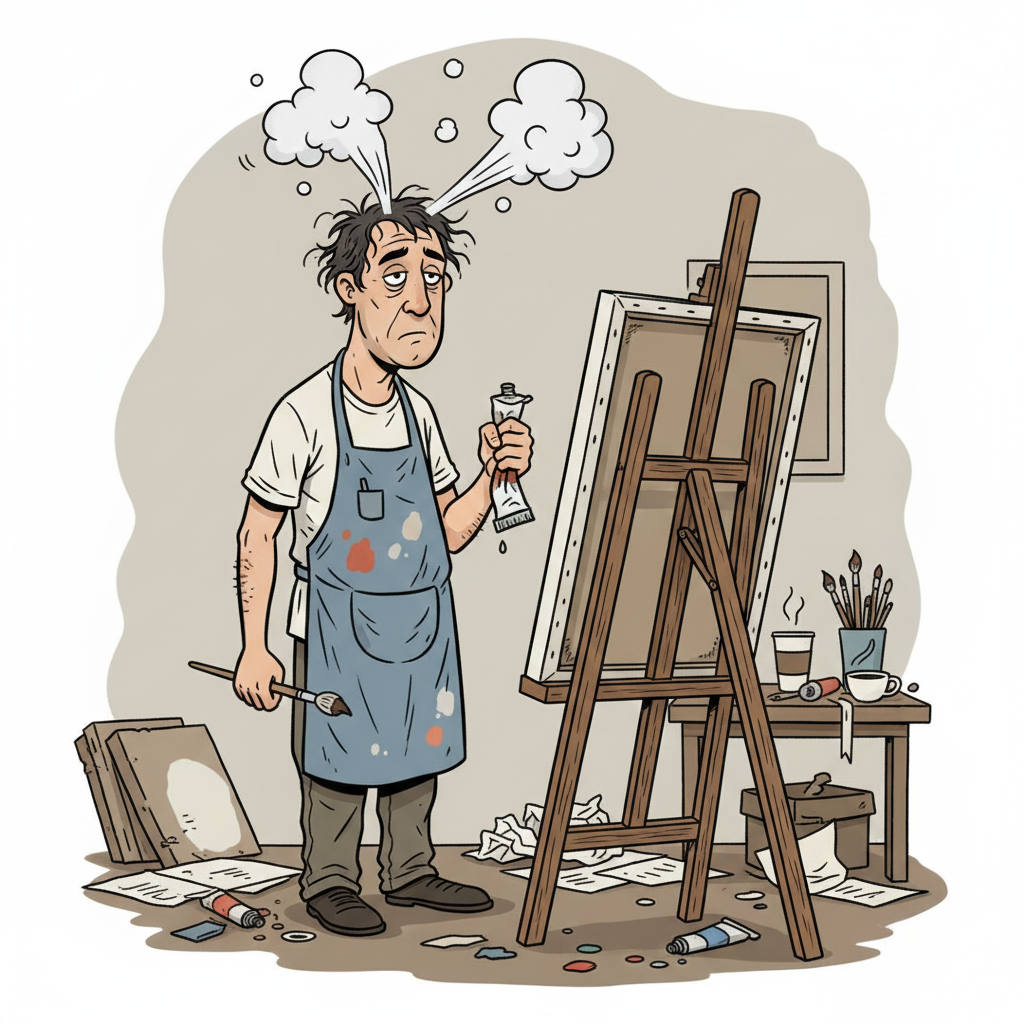
I grew up believing that “follow your passion” was the key to a good life.
My parents didn’t want me ending up like them; stressed out, overworked, too tired to enjoy the pool they worked so hard to afford.
My teachers never encouraged us to become accountants or sales reps. I guess it was more inspiring to say: “find what you love, turn it into a career, and you’ll never work a day in your life!”
It sounded beautiful. It was also completely misguided.
At 34, after spending my entire adult life chasing passion, I’m finally learning to chase something else.
- The Fantasy They Sold Us
- The First Dream That Died
- When the World Stops Feeling Magical
- Chasing Passion Through Constant Novelty
- The Cycle Sets In, The Novel Becomes the Familiar
- What Research Says About Passion-Chasing
- What I'm Chasing Now Instead
- Here's what I'm prioritizing now instead of passion:
- What I'd Tell My Younger Self
- Questions I Had About Letting Go of Passion
The Fantasy They Sold Us
I grew up in a household where we never wanted for anything material. We had a house, never missed a meal, a front and back yard, a two car garage. My father was a construction contractor and my mom taught at-risk youth. They both had incredibly stressful jobs, and neither wanted me to go into their respective fields.
I didn’t need much convincing. My perspective as a kid was that there was no way working all the time and being so stressed could be worth it. We had all of the material possessions of success: a nice house, a pool, and a two car garage. Yet, there was clearly something more to life.
My parents, and I think most boomers, were raised with the idea of going to college, getting a good job, and making money to support a family. Once they became the parents, the narrative changed.
“Follow your dreams” became the advice, and why not? Prior to the 2008 recession, most of the Boomer’s life span had been nothing but economic prosperity. It seemed feasible to do something you like, not just something that pays well.
It was a beautiful dream, but like George Carlin said: “You have to be asleep to believe it”
The First Dream That Died
Being young, idealistic, and someone who struggled in school despite having potential, I felt a calling to become a teacher and help students like myself achieve.
When I pictured myself as a teacher, I didn’t imagine slogging through grading essays, or breaking up fights in the hall, or sitting through endless parent-teacher meetings.
I imagined myself in an inspirational movie, igniting the classroom into passionate discussions of philosophy and literature. I pictured myself winning awards, my students telling me how much cooler I am than the other teachers.
It wasn’t until I started observing actual classrooms and substitute teaching that I got a clearer image of reality. Teachers are not always valued as much as they should be. A lot of energy goes into maintaining order and keeping the class from slipping into chaos. It can look like hand-holding and babying to get the bare minimum out of students who just don’t care.
I should have known; I myself was not an inspired student. I did the bare minimum to get by and was much more focused on hanging out with friends than connecting with the learning material.
But who is going to tell the starry-eyed newbie that thick skin is what will get them through? That developing a strong routine and having realistic expectations is what will give them longevity? The realities of work do not line up with the dreamer’s mindset.
Teaching was one of the first “passions” I became disillusioned with. I started to realize that speaking in front of teenagers all day while they did their best to disrupt my plans would burn me out very quickly.
I eventually dropped out of college with no backup plan. It was devastating.
When the World Stops Feeling Magical
Prior to that experience, I had always thought of my personal dreams as something sacred. The fact that I couldn’t see it through to fruition led me to some very painful times.
During that period, one of my best friends died of a drug overdose, which ruined me. Mental health wasn’t the buzzword it is now, and I never went to therapy or talked to anyone about it. The world came crashing down on me; I realized the world wasn’t this magical place where things just work out for people because they’re a “good person.”
Life started feeling harsh, unjust, cruel even. The 2008 housing crisis saw my father’s contracting business go down the tubes. He started losing hope as well. The future seemed less optimistic, and more bleak.
I had come to the conclusion that dreams weren’t reality. Without a degree, I felt doomed to working in warehouses and low-paying customer service jobs.
So I swallowed the bitter pill and went back to school full time while working full time. It wasnt my dream anymore, it was somebody else’s. My parents, or my community’s, but not mine. I just understood that getting a degree was how I’d finally become an independent adult.
As you may imagine, working and studying all the time just because I felt I “had to” wasn’t very inspiring.
I graduated, having paid for my classes and my rent on my own. It should have been a moment of celebration but I didn’t even walk at my ceremony.
Chasing Passion Through Constant Novelty
I had always wanted to travel but it never seemed wise financially. I kept putting it on the back burner. After I graduated and nobody was beating my door down to give me my hard-earned job, I decided I had to finally do something for myself.
So I started traveling.
At first, it was the best feeling imaginable. If you could bottle up that feeling and sell it, you’d be a billionaire. I could be anyone; nobody knew who I was or my past, nobody could put me in a box. When I met people and told them I was nomadic, their faces lit up with astonishment. They’d ask me questions and make me feel like an intriguing person. I felt like I had finally become “somebody,” whereas all my life in Illinois I had just felt like some other guy going through the motions.
Everywhere was new to me, everything was uncharted ground. I met interesting people every day, tried new foods, learned Spanish, learned new skills. It was absolutely incredible.
I found a seasonal job in California that I would work at to fund my travels, then spent some years bouncing between working there and traveling to Mexico.
It was incredible in the beginning. I felt like nobody on earth was living as interesting a life as me.
But like all things, it faded with time.
The Cycle Sets In, The Novel Becomes the Familiar
I kept going back to the same seasonal job, and after the job I always went back to Mexico or Chicago. I traveled to different places in Mexico, but I eventually found my comfort zone, and the process began again.
Next thing I knew, I was feeling complacent and bored in my newfound comfort zone; which at one time had been novel and thrilling. Traveling feels pretty casual to me now, especially in the places I’m used to. The last time I went to Mexico City, I didn’t even feel culture shock. I immediately slipped back into a familiar routine of going to the markets, talking to people in Spanish, going to random events using the metro.
Don’t get me wrong: it has been an immense privilege to travel and experience the things I have. It’s just funny how anything can become normal with enough time.
Even passion.
What Research Says About Passion-Chasing
Turns out, I’m not alone in discovering that passion-driven career choices often lead to burnout rather than fulfillment.
A study on work passion and burnout published in Social Sciences distinguished between two types of passion: “harmonious passion” (where work is integrated into your life flexibly) and “obsessive passion” (where you feel compelled to work and can’t disconnect).
The researchers found that obsessive passion: the kind that sounds like “follow your passion!” advice, actually predicted higher levels of work-family conflict and burnout. Meanwhile, harmonious passion, which is more about consistent, balanced engagement, protected against burnout.
In other words, the more desperately you chase passion in your work, the more likely you are to crash.
As study by the American Psychological Association found that nearly 90% of Gen Z and Millennials state that passion is their top priority in choosing a career. However, once employed, another study found that 67% of people found their jobs to be isolating, demoralizing, and boring. The gap between expectation (work should feel amazing!) and reality (work is often mundane) becomes a source of chronic dissatisfaction for those entering the work force.
What I’m Chasing Now Instead
As I’ve grown older and the fiery angst of my youth has simmered down to a dull hum, I’ve come to understand some realities about work.
First of all, I think most people want to work, because through work comes dignity, pride, and self-esteem. I do not believe that anyone truly wants to do “nothing.”
Kitchens became my work home, and even though the work is tough, grueling, even, I began to learn that I don’t dislike work. I actually am a harder worker than the typical person. I’m just better suited to certain kinds of work.
While writing itself has been a passion, it’s also work. Not only is it work, but it’s work that doesn’t exhaust me as much as other types of work can. It’s a type of work that plays to my strengths and not my weaknesses. It’s something I can do day in and day out like cooking, except it has the potential to pay better and is less likely to destroy my body over time.
My reasoning has gotten a lot more practical. At this point in my life, it seems silly to expect passion from a job. It’s great if you can arrive there organically, but it’s no longer a prerequisite for me.
Here’s what I’m prioritizing now instead of passion:
- Work that doesn’t break me down – I want to come home with energy left for the things I actually love
- Skills that compound over time – Not starting from zero every year when the passion fades
- Financial stability – Turns out, stress about money can kill your passion to engage in past times as well!
- Sustainable pacing – Not burning bright for two months then crashing into a wall
- Work that plays to my strengths – Writing, thinking, creating, without the romance of “following my dreams”
I am passionate about life. I can get that fulfilled outside of work. As long as what I’m doing is challenging, helping me grow a skill, and allows me to be creative, I’m happy.
That’s why I’m choosing digital marketing. Not because I’m passionate about SEO or email marketing. But because it’s remote, it pays decently, it uses skills I already have (writing), and it won’t destroy my body or leave me too exhausted to live.
What I’d Tell My Younger Self
Passion isn’t everything. It burns bright and fast.
We spend most of our lives working. It isn’t sustainable, let alone possible, to feel passionate about your work for the entirety of your career. You are much better off going into a line of work that doesn’t feel taxing, like it’s slowly breaking you down.
If you can come home after work and still have energy to do the things you love and enjoy life, then I think that’s amazing and a privilege in this world to have. If you come home every day and feel the need to go right to bed, maybe you need to find something else.
If you find yourself excelling at things for a month or two before crashing violently into a wall, then you are probably overemphasizing the importance and power of passion in your career search.
The “follow your passion” advice isn’t wrong, exactly. It’s just incomplete.
What they should have told us: Find work that doesn’t drain you, pays enough to live without constant stress, and leaves you with energy for the things you actually care about. If passion shows up along the way, great. If not, that’s fine too.
Because the real dream isn’t loving your job.
It’s having a life you don’t need to constantly escape from.
Questions I Had About Letting Go of Passion
Isn’t it depressing to give up on passion?
Honestly? It’s been a relief. Chasing passion felt like chasing a high; amazing when you caught it, devastating when it faded. Choosing practical work that doesn’t destroy me feels sustainable in a way passion never did. I’m still passionate about things, just not my paycheck. I’m passionate about writing, about learning, about the life I can build when I’m not constantly burned out or broke.
How do you know if you’re settling or being practical?
Settling is taking a job you hate because you’ve given up. Being practical is choosing work that you can do consistently without breaking yourself. The difference is whether you’re moving toward something sustainable or just accepting misery. If you come home with energy left for your actual life, you’re probably being practical. If you come home and collapse into bed dreading tomorrow, you’re settling.
What if I’m already deep into a passion-based career?
I’m not saying abandon everything. But ask yourself: Is this sustainable? Can I do this for 10 more years without burning out? If the answer is no, it’s not passion that’s the problem, it’s the unsustainable way you’re pursuing it. Maybe you need to shift how you approach the work, or maybe you need to find a related but less intense path. The goal is longevity, not intensity.
Does this mean I shouldn’t care about my work?
No. I care about doing good work. I want to get better at what I do. But I’ve stopped expecting my work to fulfill me the way passion promised it would. Work can be meaningful without being your entire identity. It can challenge you without consuming you. That’s actually a healthier relationship with work than the all-consuming passion I used to chase.